

Control and Surveillance Tech in Grands Sports Activities in Morocco: Challenges, Opportunities, and Ethics
Introduction
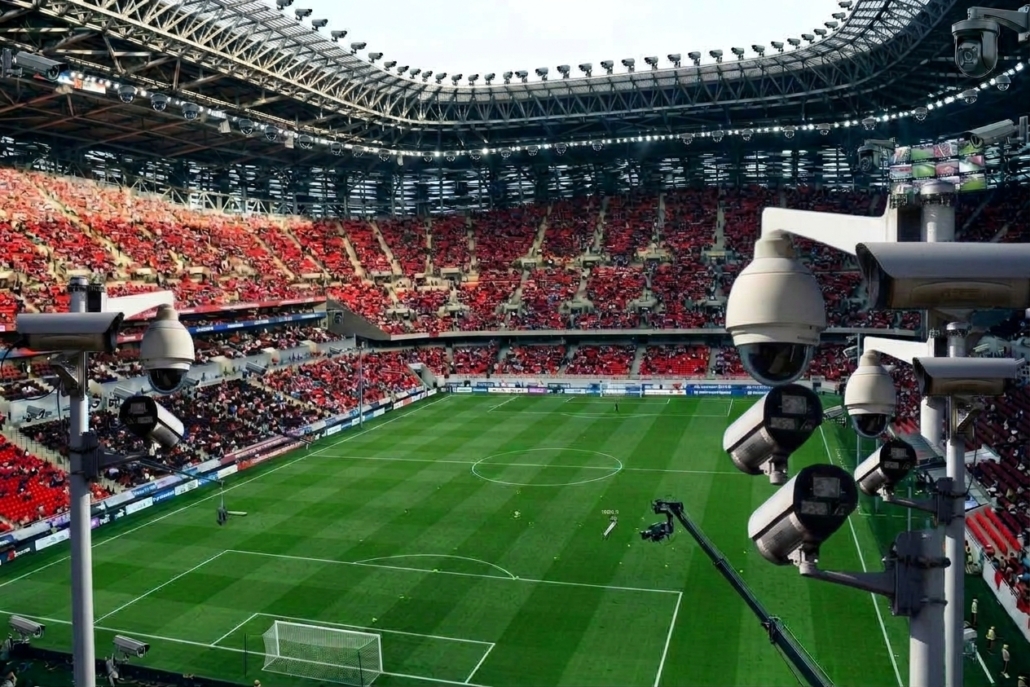
Cyber technologies are gradually being used in the field of sports in general and in football specifically at the international level, with the aim of leveraging technological potential and skills in the organization and management of related events. This massive integration of technologies in the field of football, although its opportunities are numerous, also has multiple repercussions, exposing several legal, ethical, security, and stability issues for events incorporating these technologies (Hussein & Sridevi, 2025). FIFA’s major events, including Olympic and global sporting occasions, are gradually relying on surveillance and real-time control technologies as well as smart facial recognition technologies. The potential of video analysis through artificial intelligence and the use of smart biometric sensors to control crowds and limit gatherings are also integrated into these events and are part of modern sports infrastructures. The use of these technologies, according to proponents, helps to consolidate security and strengthen the stability of famous national and international sporting events, ensure the comfort of spectators, and also the confidence of partners in the security capabilities of host countries (Hutchins & Andrejevic, 2021).
Nevertheless, the massive integration of the technologies under discussion raises several questions and accumulates inquiries of various natures, particularly legal, societal, and ethical. In this regard, Morocco’s commitment with the Iberian countries to organize the World Cup in 2030 will raise several questions and inquiries about the effectiveness of existing instruments and mechanisms to maintain the balance between the security requirements related to the perfect organization of an event of such magnitude, and the issues of law and freedoms imposing respect for legal and ethical principles (Kiasse, 2025). The organization of the 2030 World Cup, while offering Morocco enormous economic and development potential, including in the field of cybersecurity and the development of digital and sports infrastructures.
This will increase, as well as the gaps in cybersecurity and accumulate multiple threats, likely exploited by instigators seeking to disrupt this global event. In addition to the above, the organization of this event also raises questions about the use of technologies under discussion to enhance security and ensure stability during activities, as well as about institutional fragmentation in cybersecurity among host states, the limits of cooperation between organizations, particularly those of a security nature, the harmonization of procedural frameworks in cybercrime, etc. (El Bouazzaouy & Amri, 2025).
- Question and Objective of the Intervention
The main question then in this intervention is the following: how can Morocco, whose massive integration of these technologies is presented as a comprehensive response to security challenges during the organization of major sporting events, reconcile its security requirements with its internal and international commitments to respecting rights and freedoms and serve as a model in terms of data protection and fundamental ethical principles? According to Veltmeijer and Gerritsen (2025), events of such magnitude spontaneously generate enormous flows of personal big data, whose weak protection or misuse can threaten the integrity of this data and expose it to the dangers of exploitation. Zatsepina and Ludvigsen (2025) confirm that during the organization of the 2024 Olympic Games in Paris, the data flows generated raised several questions within the French and international academic community regarding the protection and security of this data, including the legal and ethical obligations of the French State in this event. We believe that the situation will be the same when Morocco aspires to host the World Cup in 2030, which will expose the country to enormous challenges regarding Law 09-08 on the protection of personal data, and its ability to harmonize and balance security requirements with legal issues and ethical principles.
This intervention also serves, in terms of objective, to prospect the issues and analyze the challenges that could disrupt the functioning of existing legal and ethical frameworks, and examines the harmful effects of using the technologies in question to successfully carry out these events under review. Our intervention also tested the legal mechanisms and institutional instruments used to ensure the protection of data flows and proposed some recommendations in terms of governance and management, in order to ensure the smooth running of the event and any other similar event that Morocco plans to organize.
Although our contribution does not constitute a novelty regarding studies related to the examination of the use of surveillance technologies and the evaluation of ethical and moral issues and challenges. Our intervention is part of the projection of known accumulations and academic heritage in this field toward new theaters—such as Morocco—in order to explore undesirable implications and avoid unforeseen repercussions in such national-level events. Previous studies have explored the impacts of the use of these technologies, generally linking them to specific cases or questions, whereas our study aims to uncover a new field of implications, which is Morocco, and contributes to avoiding impacts, nurtured or limited by Moroccan specificity.
- The Methodology and the Theoretical Framework
To achieve the objectives of the study, we are committed to a methodological procedure based on the systemic analysis of previous experiences between specific cases that have already engaged in organizing similar events. The examples we adhere to in this analysis are France as the organizer of the 2023 Olympic Games, and Qatar as the host of the 2022 FIFA World Cup. We have chosen these examples as cases to study closely, firstly because they have had a significant international impact due to the successful organization of such events, including the massive use of technologies that contributed to this success by better organizing and primarily securing these events. Secondly, because these two example states have organized two world sporting events and not just simple national sporting occasions.
We are delving deeper to understand how the two example cases managed the situation during the sporting events they organized. The data targeted to structure the analysis are indexed academic data and reliable media information circulated on the internet and within academic and journalistic databases discussing the issues and challenges of implementing surveillance technologies and how they contribute to the success of such events, including the questions surrounding their use.
According to Hussein and Sridevi (2025), the potentials of surveillance and control technologies are numerous as these technologies have offered enormous operational potentials, helping to secure and ensure the stability of social spaces. Facial recognition, biometric control, intelligent anomaly detection, and threat prevention through data analysis using artificial intelligence, as well as the use of Internet of Things (IoT) technologies to measure gathering density, etc., widely used especially in smart urban spaces, have helped stabilize society and secure areas often considered black spots in urban security.
Pattarawetwong (2026), the massive integration of IoT within sports infrastructures during these events increases the chances for authorities and security agencies to monitor crowd presence in these targeted areas. He adds that these systems not only contribute to the improvement of security conditions and the stability of urban and sports spaces in our case study. When these technologies consequently help facilitate citizens’ access to the services and goods provided at these events to spectators by assisting crowds in moving and navigating properly, for example, without blocking exits or access points.
However, Bendig et al. (2024) confirm that although these technologies offer advantages in terms of secure use and access to services, they consequently impose repercussions against the legal, ethical, and freedom frameworks generally associated with human societies. In this sense of debate, Smith and Miller (2021) confirm the idea by estimating that this technological grip caused by the widespread integration of surveillance and smart control technologies to secure these events reinforces the authoritarian iron fist toward modern societies by exploiting the mobilization of citizen masses in these sports spaces, seeking pleasure and passion and honoring their teams.
- The National Normative Corpus
Morocco has national and conventional legal frameworks related to the protection of privacy and personal data protection. Law 09-08 on the protection of personal data and the convention annexd in the same domain. In addition to the constitutional guaranties (Article 24, 2011), these standards attempt to establish a legal framework consolidating the protection of personal data and providing the legal basis for organizing interactions between authorities and citizens by prioritizing rights over the operational requirements of security agencies on the ground (CNDP, 2022).
At the organizational level, Morocco has established the National Commission for the Protection of Personal Data, which aims to oversee the implementation of the law in this area (CNDP, 2022). This demonstrates that the right to privacy and to live in safety, free from technological intrusions affecting one’s integrity, are considered, as a supreme principle, essential principles of domestic law affirming the priority of individual personal integrity over security requirements (Haounani and Akkour, 2023).
However, these instruments and mechanisms still lag behind in catching up with technological innovations and regulating potential abuses of fundamental rights defended by law, particularly real-time surveillance intrusions and the capabilities of biometric data flow sensors enhanced by the potential of artificial intelligence in analysis and detection. However, Morocco is trying to strengthen its efforts to enhance the presence of the law in these processes of digitizing national security and stability, and consequently, in these large-scale sporting events. For many, surveillance and control technologies, currently used for data detection, collection, and analysis, risk violating legal frameworks due to their potential technical capabilities, undermining trust in democratic values and the ability of legal frameworks to ensure the integrity and sovereignty of citizens (Almeida et al., 2021).
- Challenges and Issues
The first problem, according to our observations, is organizational in nature. Teams and clubs in Morocco suffer from several problems, including the use and management of technologies to improve the entire field, which are still far from expectations. These Moroccan sports organizations are still far from adopting these innovative solutions, as traditional concerns of a financial, technical, human, logistical nature, etc., remain the main scourge (Bouzakria and Khal, 2026). Moroccan clubs, although they reflect a better image of Morocco abroad, still adopt traditional management methods and cannot integrate the technologies under discussion to improve either the functioning of their administrations or the development of their positions in the global sports market.
Most Moroccan clubs couldn’t even change their status from association to company due to funding fears and lived in instability and corruption. Moreover, the majority of Moroccan football clubs still do not have their own fields and play their competitions on municipal fields. Before questioning the willingness of the clubs and their leaders, it is better to point out that these clubs no longer have the necessary capabilities, including the required experience, to successfully integrate these technologies and adapt to them to avoid their undesirable impacts and repercussions on the conduct of global sporting events.
Moreover, the sporting events for which Morocco has already committed to organizing, such as the Africa Cup 2026, demonstrate the limitations of the security strategy for this event. The crowds that went wild at the end of the Cup demonstrate how limited the coordination between Moroccan sports and non-sports institutions was (Kayssi & Zarhloule, 2026). The debates that followed this final estimate that the indirect contribution of foreign intelligence services is real, fueling the escalation on the ground and encouraging the revolt of the masses. This conspiracy anecdote, although it is widely spread on the internet and in unofficial information channels. It results from the idea that politics and conspiracy theories are currently part of football, turning it from a field of mere enjoyment into a domain of cunning and manipulation. Requiring the strengthening of security strategies and the stabilization of sporting events, which Morocco values in its organization.
Regarding this debate, Raman and Singh (2023) believe that the massive integration of surveillance technologies and real-time control constitutes an effective solution to stabilize future events and ensure law enforcement by deterring all illegal activities within these events. Surveillance cameras and intelligent control methods already used in similar events have proven their effectiveness in anticipating crowds and preventing dramatic events within these global activities. But yet, they are met with major criticisms that limit the absolute favorable image, and open the debate around the ethical and moral repercussions.
According to proponents of the primacy of security over freedoms, the challenges that threaten the rights and fundamental principles of citizens are a debate that must be won until the end of such occasions as a small sacrifice in favor of the national interest. Because these occasions and events bring enormous economic and commercial opportunities to the host states, and consequently contribute to the overall revival of the sports sector in Morocco, including the development of national sports infrastructure and the guaranty of colossal revenues for the states (Bouazzaouy and Amri, 2025).
The debate around the preeminence of opportunities at the expense of principles, and one of the impacts of the integration of surveillance and intelligent control technologies for the security and stabilization of large-scale sporting events. And the fact that the debate is still open risks causing delays regarding modifications to the security strategy related to these events by giving more advantages to security priorities while neglecting libertarian principles, which can be exploited to undermine the achievements of rights and freedoms, as was the case in France during the organization of the Olympic Games and the Qatar World Cup, which were heavily criticized for violating the principles of law and ethics related to people’s privacy due to the massive use of surveillance and control technologies to secure these events.
- Recommendations and Conclusion
We recommend at the end of this intervention that legislative clarity is essential for a logical integration of surveillance and real-time control technologies as well as all other related technologies. We believe that this clarity should be based on the overall strategy for integrating these technologies in all areas and should not be limited to considering only the arguments based on crowds and the disruptions caused by masses during sporting events. The integration of these technologies is broader and encompasses all areas of urban life, ranging from traffic monitoring to biometric control of travelers.
A recommendation that we consider essential is that the specificities of the application domains be highlighted in this integration strategy by separating the requirements specific to sports from those specific to security. This means that the implementation of control and surveillance technologies goes beyond the security angle and touches on ethics and morality, where the security pretexts of prioritizing the stability of events over the respect of the country’s internal and international commitments related to the field of freedoms and the right to privacy must be treated equally and fairly when developing a security strategy for these events, in order to ensure the integrity of individuals and performances within these events.
Furthermore, we recommend activating the local and international institutions and frameworks to which Morocco is committed, particularly those related to the CNDP, by expanding the frameworks of Law 09-08 and the competencies of Convention 108. Morocco should multiply awareness and information programs under the auspices of the CNDP, as the responsibility of maintaining privacy is not solely the state’s responsibility, but also that of its citizens. The commission should also become more active and strengthen its roles within these data protection processes as an internal legal instrument dedicated to the protection of personal data. Morocco, in this regard, should assign responsibilities, especially those related to the Moroccan state, and develop its cybersecurity capabilities in particular. Because the issue of protecting individuals’ data during these events is no longer solely a matter of respecting freedoms and legal principles, the strengthening of cybersecurity measures is also an obligation for which operators and beneficiaries of such public contracts should be held accountable in light of the measures and requirements of Moroccan law instruments and mechanisms aimed at protecting personal data and the privacy of Moroccans.
Regarding the narrow frameworks related to Law 09-08, we recommend expanding this law to cover new areas related to surveillance and control and professional hacking, especially after technological advancements related to the integration of artificial intelligence potentials for collecting, processing, analyzing, etc., data in surveillance and control processes, in order to limit unforeseen and under-criticized ethical and moral effects in the international arenas of law and freedoms. Additionally, strengthen legislative deterrent capacities against attempts of intrusion and hacking against surveillance and control infrastructures within the spaces targeted by the strategy for securing high-impact sporting events. The law under discussion should be clear and include specific texts regarding the reasons and methods of data handling during these events.
Moreover, the fact that Morocco is integrating into a process of developing sports infrastructure, it will have to commit to a strategy of training personnel and human resources. The idea is that Morocco should invest in training personnel who master the use of these technologies in the best security standards and requirements, and in respecting the principles of law and freedom in the closed rooms intended for these operations, in order not to disclose or manipulate private content, or by mistake help hackers steal the private information collected during surveillance and control operations, etc. The mastery of surveillance and control technologies should finally be governed by a logic that respects ethical use and guaranties compliance with the law without weakening security measures. This vision should be based on a preventive approach to risks before the situation leads to comparisons and choices between what is primary and what is secondary.
We finally see that the process of integrating surveillance and control technologies constitutes an advancement in Morocco’s overall digitization strategy. This process will give Morocco the opportunity to benefit from the potential of these technologies to enhance the security of the sporting events that Morocco aims to host in the future. These events, although they expose the country and Moroccan authorities to significant contradictions, offer them the opportunity to harmonize technological potentials with security requirements and the respect for laws and ethical obligations that Morocco recognizes. If Morocco succeeds in this challenge, it will contribute positively to an ongoing international debate on the governance of surveillance and real-time control technologies and will be one of the continental and regional pioneers in the sustainable implementation of these technologies.
- References
- Ad, C. (2023, December 13). Communiqué de presse : La CNDP continue de décliner sa mission de tiers de confiance numérique. Retrieved from https://www.cndp.ma/communique-de-presse-la-cndp-continue-de-decliner-sa-mission-de-tiers-de-confiance-numerique/
- Almeida, D., Shmarko, K., & Lomas, E. (2021). The ethics of facial recognition technologies, surveillance, and accountability in an age of artificial intelligence: A comparative analysis of US, EU, and UK regulatory frameworks. AI and Ethics, 2, 377–391. https://doi.org/10.1007/s43681-021-00077-w
- Amlih, H., & Mrani, A.. Perception des stratégies de gestion des flux lors de la Coupe du Monde des Clubs de la FIFA Maroc 2022 : Enseignements pour l’organisation de la Coupe du Monde 2030. https://doi.org/10.34874/IMIST.PRSM/refsport-i5.61250
- Bassime, L. Application in moroccan law of standards for the protection of individuals with regard to the processing of personal data. 9(2). 357-377. https://revues.imist.ma/?journal=REMSES&page=index
- Bendig, K., Schuster, R., Thiemer, N., & others, (2024.). AnonyNoise: Anonymizing event data with smart noise to outsmart re-identification and preserve privacy. https://doi.org/10.1109/WACV61041.2025.00312
- Bouzakria, I., & Zerhouni Khal, M. (2026). AI adoption in Moroccan sports organizations: Qualitative study. https://doi.org/10.48379/IMIST.PRSM/mjqr-v8i1.65442
- EL Bouazzaouy , A. et Amri , M. 2025. Vers une gouvernance intégrée des méga-événements : défis logistiques, infrastructurels et numériques du Maroc pour la Coupe du Monde 2030. Revue Française d’Economie et de Gestion. 6, 10 (oct. 2025).
- El Kiasse, R. (2025). The Achievements of Morocco Following the Joint Organization of the 2030 FIFA World Cup with Spain and Portugal. European Journal of Applied Sciences, 13(02), 119–123. https://doi.org/10.14738/aivp.1302.18388
- Haounani, A. and Akkour, .S. 2023. Les données personnelles à l’ère du big-data : quel cadre juridique au maroc ?. revue internationale du chercheur . 4, 1 (mar. 2023). https://www.revuechercheur.com/index.php/home/article/view/559
- Hussein, L., & Sridevi, J.(2025). Analysing the implementation of IoT infrastructure in stadiums and sports venues to enhance operations, security, and overall fan experience. In, Balaji, D.P., Kalayci, P.D., & Ramkumar, S.S. (Eds.). (2025). Advances in Sports Science and Technology (1st ed.). CRC Press. https://doi.org/10.1201/9781003616283
- Hutchins, B., & Andrejevic, M. (2021). Olympian Surveillance: Sports Stadiums and the Normalization of Biometric Monitoring. International Journal of Communication, 15, 363-382.
- Kayssi, I., & Zarhloule, Y. (2026, February 26). When football is more than football. Carnegie Endowment for International Peace. https://carnegieendowment.org/middle-east/diwan/2026/02/when-football-is-more-than-football
- Mhammed, K. (2025). Cyber Intelligence & Moroccan National Security: What Strategy for Managing and Mitigating Cyber Threats against Future Sporting Events. Journal of Cyber Security and Risk Auditing, 2025(4), 366–383. https://doi.org/10.63180/jcsra.thestap.2025.4.12
- Pattarawetwong, N., Savithi, C., & Suttidee, A.(2026). Toward an integrated IoT–edge computing framework for smart stadium development. https://doi.org/10.3390/jsan15010015
- R. Raman & A. Singh. (2023). 5G and IoT for Smart Stadium Operations for Enhancing Fan Experience and Safety,” 2023 International Conference on Advances in Computation, Communication and Information Technology (ICAICCIT), Faridabad, India, 2023, pp. 1128-1132, doi: 10.1109/ICAICCIT60255.2023.10466056.
- Smith, M., & Miller, S. (2022). The ethical application of biometric facial recognition technology. AI & society, 37(1), 167–175. https://doi.org/10.1007/s00146-021-01199-9
- Veltmeijer, E., Gerritsen, C. (2025). Legal and ethical implications of AI-based crowd analysis: the AI Act and beyond. AI Ethics 5, 3173–3183. https://doi.org/10.1007/s43681-024-00644-x
- Zatsepina, L. N., & Ludvigsen, J. A. L. (2025). Algorithmic Olympics: Exploring the ethical and social implications of AI surveillance through the case of Paris 2024. https://doi.org/10.1080/19406940.2025.2529201
Leave a Reply
Want to join the discussion?Feel free to contribute!